 ee
eeWebcams ›
Best Webcam For Stop Motion 2026
Stop motion animation demands capturing anywhere from 12 to 24 individual frames for every single second of finished video — meaning a two-minute short film can require over 2,880 precisely positioned photographs before you even open editing software. The webcam you choose for this painstaking, deliberate art form determines whether those thousands of frames feel cohesive and cinematic, or whether drifting autofocus, inconsistent exposure, and unreliable color reproduction sabotage hours of meticulous positioning work. In 2026, the webcam market has matured significantly, offering serious stop motion creators options that would have required dedicated DSLR rigs just a few years ago.
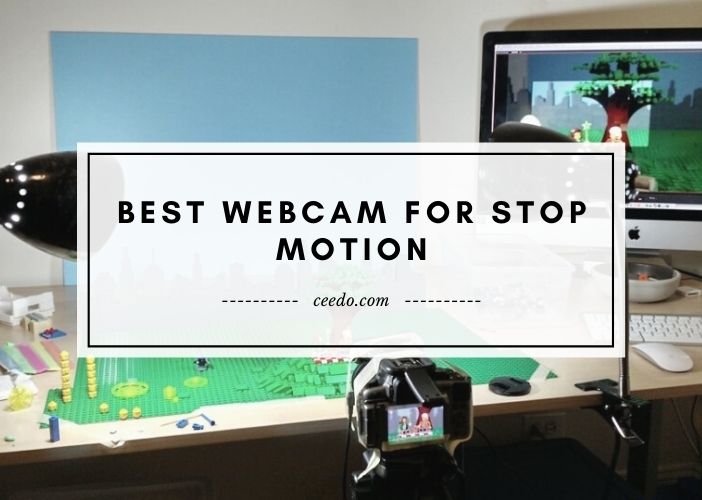
Stop motion is unforgiving in ways that standard video conferencing simply is not. A webcam that delivers acceptable results on a Zoom call can fail catastrophically when frame-to-frame consistency becomes the single most important variable. What you actually need is a camera with lockable focus, stable color temperature across thousands of consecutive shots, and a sensor that handles the controlled, artificial lighting typical of a stop motion setup without blowing out highlights or crushing shadow detail. According to Wikipedia's overview of stop motion animation, the technique dates back to the 1890s, and modern practitioners still rely on the same fundamental principles — frame-perfect consistency and precise control over every visual variable. If you're researching webcams across different use cases, our guide to the best webcams for Skype in 2026 provides useful context on what separates general-purpose cameras from specialist tools, and Linux users will find additional perspective in our best webcams for Linux 2026 roundup.
The seven webcams featured in this 2026 roundup were evaluated specifically through the lens of stop motion requirements: frame-to-frame consistency, availability of manual control or focus lock, build quality suited to stable desk or tripod mounting, software flexibility, and sensor performance under controlled artificial lighting. Whether you're animating clay figures, paper cutouts, LEGO sets, or intricate miniature environments, one of these cameras will match your budget and your creative ambitions. Browse our full webcam category for additional options across all use cases, and read on for the complete breakdown.
Contents
- Editor's Recommendation: Top Picks of 2026
- In-Depth Reviews
- Logitech C920x HD Pro — Best Budget Pick
- Logitech Brio 4K — Best 4K Value
- Elgato Facecam 4K — Best Professional Choice
- Elgato Facecam MK.2 — Best for Streamers
- AVerMedia Live Streamer CAM 513 — Best Ultra-Wide Angle
- NexiGo N960E — Best with Built-in Lighting
- Anker PowerConf C200 — Best Mid-Range Value
- Choosing the Right Webcam for Stop Motion
- Frequently Asked Questions
Editor's Recommendation: Top Picks of 2026
- #PreviewProductRating
- Bestseller No. 1
 Rating:

- Bestseller No. 2
 Rating:
 - Bestseller No. 3
 Rating:
- Bestseller No. 4
 Rating:
 - Bestseller No. 5
 Rating:
 - Bestseller No. 6
 Rating:
 - Bestseller No. 7
 Rating:
In-Depth Reviews
1. Logitech C920x HD Pro Webcam — Best Budget Pick for Stop Motion
The Logitech C920x has been the de facto entry point for serious webcam use for years, and in 2026 it continues to earn its place on this list through sheer reliability and broad software compatibility. For stop motion specifically, the C920x delivers consistent 1080p at 30fps with HD light correction that works admirably under the controlled artificial lighting most stop motion rigs use — the autofocus system, while not lockable through native controls, is stable enough in fixed-distance shooting scenarios that frame drift becomes a manageable rather than catastrophic concern. You get a universally compatible plug-and-play setup that works with every major stop motion software package, including Dragonframe when used with third-party control utilities.
The build quality on the C920x reflects its price tier honestly — the clip mount is functional and adjustable, the glass lens delivers sharper results than similarly priced plastic-lens competitors, and the dual microphones, while not stop-motion-relevant, make this a genuinely versatile tool for your broader creative workflow. Logitech's advanced capture software integrates cleanly with most desktop environments, and the compatibility with Nintendo Switch 2's new GameChat mode adds unexpected flexibility for creators who document their process across platforms. At this price point, you're accepting the trade-off of limited manual control in exchange for bulletproof compatibility and proven long-term reliability.
Pros:
- Proven, reliable 1080p image quality with consistent color reproduction across long sessions
- HD automatic light correction handles controlled studio lighting well without manual intervention
- Universal compatibility with stop motion software, streaming tools, and conferencing platforms
- Logitech's glass lens delivers sharper results than plastic-lens competitors at the same price
Cons:
- Autofocus cannot be natively locked, which creates occasional frame-to-frame inconsistency in detailed close-up shots
- Capped at 1080p/30fps — no upgrade path if your projects demand higher resolution output
2. Logitech Brio 4K Webcam — Best 4K Value for Stop Motion
The Logitech Brio 4K represents a genuine leap in image quality over the C920x, delivering superb 4K resolution at 30fps with autofocus performance and color accuracy that holds up exceptionally well across the thousands of consecutive frames that a stop motion project demands. RightLight 3 — Logitech's third-generation automatic exposure and contrast system — does a remarkable job of maintaining consistent exposure across long shooting sessions, which is precisely the characteristic that stop motion animators need most from their camera hardware. The adjustable field of view, with three diagonal presets spanning 65° through 90°, gives you meaningful compositional flexibility that fixed-FOV cameras simply cannot match.
For stop motion workflows, the Brio's 5x digital zoom opens up useful framing options when your physical setup constraints limit camera positioning, and the 4K capture resolution means you're working with significant headroom for cropping in post-production without sacrificing output resolution. The camera's Windows Hello support and noise-canceling microphone are secondary features for animation purposes, but they reinforce the Brio's positioning as a premium, multi-purpose tool that earns its place in a serious creative studio. The USB-C connection ensures bandwidth for the 4K data stream without compromise, and Logitech's software ecosystem provides granular control over exposure, white balance, and focus settings that stop motion animators will find genuinely useful during setup and calibration.
Pros:
- 4K at 30fps with outstanding color accuracy and detail retention across long shooting sessions
- RightLight 3 delivers superior automatic exposure consistency — critical for stop motion frame coherence
- Three adjustable field of view presets (65°, 78°, 90°) provide genuine compositional flexibility
- 5x digital zoom useful for tight framing when physical positioning is constrained
- Software controls for manual white balance and exposure lock during session setup
Cons:
- Premium pricing places it well above entry-level stop motion budgets
- 4K output requires a capable USB port and processing headroom in your editing workflow
3. Elgato Facecam 4K — Best Professional Choice for Stop Motion in 2026
The Elgato Facecam 4K is the camera on this list that most closely bridges the gap between webcam convenience and dedicated camera control, delivering 4K at a full 60 frames per second with uncompressed video output that gives you the cleanest possible source material for frame extraction and color grading. For stop motion work, the Sony STARVIS 2 CMOS sensor is a significant differentiator — this is a professional imaging component that handles the low-contrast, controlled-lighting environments typical of stop motion sets with far greater finesse than the commodity sensors found in mass-market webcams. The Elgato Prime Lens technology sharpens the optical path to a degree that competing cameras at this price tier cannot match, and the 49mm lens filter thread opens your setup to neutral density filters and color gels that give you precise control over your image character.
Elgato's Camera Hub software is the feature that makes this camera truly exceptional for stop motion workflows in 2026. The DSLR-like controls available through Camera Hub — including manual shutter speed, ISO, white balance, and focus lock — address the fundamental control requirements of stop motion animation that most webcams ignore entirely. The HDR mode handles challenging contrast scenarios with genuine intelligence, and the cinematic effects available in Camera Hub give you creative options during capture rather than forcing all post-processing into editing software. The USB-C connection with uncompressed video output means every frame you capture is as clean as the sensor can produce, with no compression artifacts accumulating across thousands of shots.
This is the camera you choose when your stop motion project demands publication-quality output and you're not willing to accept the limitations of consumer-grade imaging hardware. The build quality is exceptional, the lens mount accepts standard filters, and the software ecosystem is mature and actively maintained by Elgato's development team.
Pros:
- 4K at 60fps with uncompressed video output — the cleanest source material available in a webcam form factor
- Sony STARVIS 2 CMOS sensor delivers professional-grade low-light performance and color accuracy
- DSLR-like manual controls through Camera Hub, including focus lock essential for stop motion consistency
- 49mm lens filter thread accepts ND filters and color gels for precise image control
- HDR mode handles high-contrast lighting scenarios with cinematic intelligence
Cons:
- Premium pricing requires a serious commitment to stop motion as a creative discipline
- Full feature set requires Camera Hub software — raw plug-and-play functionality is more limited
4. Elgato Facecam MK.2 — Best for Stop Motion Streamers
The Elgato Facecam MK.2 delivers the same Camera Hub software ecosystem and Sony sensor pedigree as its 4K sibling, but at a more accessible price point through its 1080p at 60fps specification — and for stop motion work specifically, this trade-off is more sensible than it might initially appear. The full 60fps capability gives you exceptional smoothness when you're documenting your animation process as video content alongside capturing individual stop motion frames, and the HDR mode handles the high-contrast situations that arise when studio lights hit reflective surfaces on your subject. The PTZ (pan-tilt-zoom) control available through Camera Hub provides remote framing adjustments without physically touching your camera setup, which is genuinely valuable when you need to reframe between shots without risking camera movement that would ruin your animation sequence.
The Sony sensor inside the MK.2 delivers professional-grade color science that maintains consistent white balance and exposure characteristics across extended shooting sessions — exactly the reliability that stop motion demands from its imaging hardware. Camera Hub's manual control suite gives you the focus lock, exposure control, and color temperature adjustment that a stop motion rig requires, and the software receives regular updates from Elgato's development team that add features and refine existing functionality. The build quality is characteristically excellent — the mounting system is stable and precise, which matters enormously when your camera position must remain absolutely fixed across days or weeks of animation work.
Pros:
- Sony sensor with HDR delivers exceptional color consistency across long stop motion sessions
- PTZ control through Camera Hub enables reframing without physically touching the camera
- Full Camera Hub manual control suite including focus lock, exposure, and white balance adjustment
- 1080p at 60fps provides outstanding smoothness for process documentation and streaming
- More accessible pricing than the Facecam 4K while retaining the essential manual control features
Cons:
- 1080p ceiling limits output resolution compared to 4K-capable alternatives at similar prices
- Full functionality depends on Camera Hub software installation and regular updates
5. AVerMedia Live Streamer CAM 513 4K — Best Ultra-Wide Angle Option
The AVerMedia CAM 513 approaches the stop motion use case from a different angle than the other cameras on this list — its 94° ultra-wide field of view and fixed-focus glass lens make it a specialized tool that excels in specific stop motion scenarios where capturing a broad scene with absolute focus consistency is the primary requirement. The fixed-focus design is actually an advantage for stop motion work rather than a limitation: where autofocus cameras risk subtle focus drift between frames, the CAM 513 maintains a perfectly constant focal plane across your entire session, eliminating one of the most common sources of visual inconsistency in amateur stop motion work. The 4K at 30fps output with built-in glass optics produces genuinely impressive image quality when your lighting setup — and AVerMedia is explicit that a main light source is recommended for best results — is properly configured.
The CamEngine software provides ePTZ, auto-framing, and movement tracking features that give you meaningful compositional flexibility even within a fixed physical setup, and the built-in omnidirectional stereo microphones with AI-powered noise reduction capture useful behind-the-scenes audio for your process documentation. The 94° field of view captures significantly more background than the typical 65-78° webcam, making the CAM 513 particularly well-suited for stop motion setups that incorporate elaborate backgrounds or require the camera to capture a wide stage from a fixed overhead or angled position. The trade-off is that this camera demands good artificial lighting — its fixed-focus glass lens performs beautifully under proper illumination but struggles in underlit environments where variable-aperture cameras have more latitude.
Pros:
- Fixed-focus glass lens eliminates autofocus drift — a significant advantage for frame-to-frame stop motion consistency
- 94° ultra-wide field of view captures elaborate stop motion stages and wide backgrounds with ease
- 4K at 30fps output with genuine glass optics produces sharp, detailed source frames
- CamEngine software provides ePTZ and auto-framing controls without requiring camera repositioning
- AI-powered noise reduction microphones capture clear process documentation audio
Cons:
- Requires dedicated main lighting for best results — performs poorly in underlit environments compared to autofocus alternatives
- Fixed-focus design eliminates close-up flexibility for small-subject stop motion work
6. NexiGo N960E 1080P 60FPS Webcam — Best with Built-in Lighting
The NexiGo N960E addresses a practical challenge that every stop motion creator working in a space without dedicated studio lighting eventually confronts: the need for consistent, controllable illumination that travels with the camera rather than requiring a separate lighting rig. The three-level adjustable ring fill light with stepless brightness control gives you fine-tuned illumination that you can dial in precisely and then lock at a fixed output level across your entire shooting session, maintaining the consistent lighting environment that stop motion demands without requiring you to invest in and configure a separate lighting system. The soft tone of the ring light avoids the harsh specular highlights that direct LEDs create on shiny subject surfaces, which is particularly valuable for stop motion work involving clay, metallic props, or glossy materials.
The 1080p at 60fps sensor with fast autofocus delivers clean, detailed frames under the ring light illumination, and the built-in privacy shutter is a minor but genuinely appreciated build quality touch for a camera that stays permanently mounted on your desk between sessions. The dual stereo microphones capture background audio for process documentation, and the USB-A plug-and-play connection requires no driver installation, which simplifies setup in workshop environments where you want to focus on animation rather than configuration. For stop motion creators who are just beginning to build a dedicated workspace and need a practical, self-contained solution that minimizes external dependencies, the N960E represents a pragmatic choice that trades ultimate image quality for real-world setup convenience.
Pros:
- Three-level adjustable ring fill light with stepless brightness eliminates separate lighting rig requirement
- Soft-tone ring light avoids harsh specular highlights on reflective stop motion subjects
- 1080p at 60fps delivers smooth, detailed frames with fast autofocus response
- Built-in privacy shutter and plug-and-play USB-A connection simplify permanent desk installation
- Self-contained lighting and camera solution reduces total setup cost and complexity
Cons:
- Ring light coverage limited to close-range subjects — inadequate for wide-stage stop motion setups
- No native focus lock capability, creating potential frame-to-frame autofocus inconsistency
- 1080p resolution limits output options for high-quality archival or large-format publication
7. Anker PowerConf C200 2K Webcam — Best Mid-Range Value for Stop Motion
The Anker PowerConf C200 occupies the genuinely useful middle ground between budget 1080p cameras and premium 4K options, delivering 2K resolution with superior low-light performance and an adjustable field of view that gives you meaningful creative flexibility without the steep price premium of the top-tier options on this list. For stop motion work, the C200's low-light correction capability is a standout feature — the sensor captures crisp, detailed images in dim environments without requiring you to add supplemental lighting, which opens up stop motion workflow options in spaces where full studio lighting is impractical or unavailable. The adjustable field of view lets you customize your framing without physically repositioning the camera, preserving your carefully established shooting position while adapting your composition to different project requirements.
The built-in AI noise-canceling dual microphones deliver genuinely useful audio quality for documenting your animation process, and the privacy shutter provides the same security-conscious build quality touch found on the NexiGo above — useful for a camera that lives permanently on your desk. Anker's software provides sufficient control over exposure, white balance, and focus settings to allow meaningful session configuration before you begin shooting, and the 2K resolution output gives you useful cropping headroom in post-production that 1080p cameras cannot match. At this price point, the C200 delivers the most compelling balance of resolution, low-light performance, and manual control accessibility available in the mid-range webcam segment for stop motion applications in 2026.
Pros:
- 2K resolution with exceptional low-light performance — captures clean frames without mandatory supplemental lighting
- Adjustable field of view enables compositional changes without physically repositioning the camera
- AI noise-canceling dual microphones deliver high-quality process documentation audio
- Built-in privacy shutter and Anker's proven hardware reliability for permanent desk installations
- Compelling price-to-performance ratio between budget 1080p and premium 4K tiers
Cons:
- 2K resolution, while better than 1080p, falls short of 4K options for maximum output quality
- Software control ecosystem less mature than Elgato's Camera Hub for advanced manual configuration
Choosing the Right Webcam for Stop Motion: A Buying Guide
Focus Control Is the Single Most Important Feature
Every experienced stop motion animator will tell you the same thing: autofocus is your enemy. Consumer webcams designed for video calls are engineered to continuously hunt for and lock onto faces, which means they actively adjust focus between frames — a catastrophic behavior when frame-to-frame consistency is the foundation of your entire workflow. When evaluating any webcam for stop motion use in 2026, your first question must be whether you can lock focus through software controls or whether the fixed-focus design eliminates the problem entirely. The Elgato cameras' Camera Hub software and the AVerMedia CAM 513's fixed-focus glass lens both address this requirement effectively, while the Logitech C920x's native focus lock limitations make it better suited to scenarios where your subject-to-camera distance is fixed and consistent enough that autofocus hunting becomes minimal.
- Fixed-focus cameras (AVerMedia CAM 513) eliminate focus drift entirely but sacrifice close-up flexibility
- Software-lockable autofocus (Elgato Facecam series) provides the ideal combination of flexibility and consistency
- Consumer autofocus (Logitech C920x, NexiGo N960E) requires careful setup to minimize drift — workable but not ideal
Resolution, Frame Rate, and the Stop Motion Math
Stop motion animation typically operates at 12fps (one shot per two frames) or 24fps (one shot per frame), which means your source resolution matters far more than your frame rate ceiling for animation capture purposes. A 4K source image gives you substantial post-production cropping flexibility — you can reframe, zoom, or stabilize your sequence in editing software without degrading your output resolution, which is valuable when a session's worth of frames reveals a slight framing error. Frame rate ceiling matters primarily for your process documentation video and any real-time video output you need alongside your animation capture.
- 4K (3840×2160): Maximum cropping flexibility and archival quality — prioritize this for publication-grade projects
- 2K (2560×1440): Useful middle ground with genuine headroom over 1080p at a lower price than 4K
- 1080p (1920×1080): Sufficient for social media and online publication, limited post-production flexibility
- 60fps: Valuable for process documentation video, not relevant to animation capture rate
Lighting Compatibility and Sensor Performance
Stop motion sets almost universally use controlled artificial lighting — tungsten, LED panels, or fluorescent sources — rather than natural light, because consistent illumination is as critical as consistent focus for frame coherence. Your webcam's sensor must handle the color temperature and intensity of your specific lighting setup without automatic compensation systems that adjust exposure or white balance between frames. Look for cameras with software controls that let you lock exposure and white balance to fixed values rather than allowing the camera to continuously adjust. The Elgato Camera Hub software excels here, providing precise numerical control over every relevant parameter, while the Logitech Brio's RightLight 3 system, despite its sophistication, is designed for automatic rather than locked operation.
- Always lock white balance and exposure before beginning any stop motion session
- Test your camera's exposure consistency by shooting 100 identical frames of a static subject before committing to a project
- LED panel lighting provides the most consistent color temperature over long sessions compared to tungsten sources that shift as they warm up
- Avoid cameras where software prevents manual override of automatic exposure and white balance systems
Mounting Stability and Physical Setup Considerations
A webcam's physical mounting system receives almost no attention in standard reviews but represents a critical variable for stop motion work, where camera movement between frames produces obvious, unfixable artifacts in your finished animation. The camera must remain absolutely stationary across sessions that can span days or weeks, withstanding accidental bumps, vibration from nearby equipment, and the natural settling of mounting hardware over time. All seven cameras on this list include standard clip mounts, but the superior build quality of the Elgato cameras and the Logitech Brio translates to more precise, stable mounting geometry that is less prone to drift over extended periods. For permanent studio installations, consider supplementing any camera's native clip mount with a dedicated tripod adapter and a quality ball head for precise, lockable positioning.
- Test mounting stability by marking your camera's position and checking alignment after 24 hours before beginning a long project
- USB cable management matters — a cable under tension can shift camera position as it settles; secure cables to your desk independently
- Overhead camera mounts for top-down stop motion require a camera with a standard tripod thread — verify compatibility before purchasing
Frequently Asked Questions
Can I use a regular webcam for stop motion animation?
Yes, you can use any webcam for stop motion animation, but the results vary dramatically based on the camera's focus stability, exposure consistency, and software control options. The best webcams for stop motion give you the ability to lock focus and exposure at fixed values rather than allowing the camera to continuously auto-adjust between frames, which creates visual inconsistency that is nearly impossible to correct in post-production. The Elgato Facecam series and AVerMedia CAM 513 offer the most stop-motion-appropriate control features available in a webcam form factor in 2026.
What resolution do I need for stop motion animation?
For social media and online publication, 1080p delivers sufficient quality and keeps your file sizes manageable across the thousands of frames a typical stop motion project requires. For broadcast, large-format projection, or projects where you want post-production cropping flexibility, 4K resolution provides substantial advantages — you can reframe, zoom, and stabilize your frame sequence without degrading your output resolution. The 2K resolution of the Anker PowerConf C200 offers a practical middle ground that is worth considering when the 4K price premium is difficult to justify for your current project scale.
Is autofocus bad for stop motion animation?
Consumer autofocus systems are generally problematic for stop motion work because they are engineered to continuously hunt for and adjust to the sharpest focus point, which means they can produce subtle but visible focus shifts between consecutive frames. The ideal solution is either a fixed-focus camera like the AVerMedia CAM 513 that eliminates the variable entirely, or a camera with software-lockable autofocus like the Elgato Facecam series that lets you find your focus point, lock it, and trust that it will remain consistent for the duration of your session.
What software do I need for webcam-based stop motion?
Several dedicated stop motion software packages work with standard webcams through standard video capture interfaces, including Dragonframe (the industry standard for professional stop motion), Stop Motion Studio, and iStopMotion for Mac users. These applications handle frame capture, onion skinning (overlaying the previous frame for positioning reference), playback, and export, and they work with any webcam that appears as a standard video input device on your computer. The Elgato Camera Hub software operates alongside rather than in place of your stop motion application, giving you camera parameter control through a secondary interface while your stop motion software handles capture.
Does lighting matter more than camera quality for stop motion?
Consistent lighting matters enormously for stop motion, but it and camera quality are both critical rather than one being more important than the other — inconsistent lighting produces the same frame-to-frame variation problems as poor camera control, and a superior camera cannot compensate for lighting that changes between shots. LED panel lighting is the practical recommendation for most stop motion setups because LEDs maintain consistent color temperature and intensity across long sessions without the warm-up shift of tungsten sources, and because they generate less heat than traditional studio lights, which matters when your set includes materials sensitive to temperature change.
Which webcam on this list is best for beginner stop motion animators?
The Logitech C920x is the most accessible starting point for beginners, offering proven image quality, universal software compatibility, and reliable long-term performance at a price that lets you invest remaining budget in proper lighting, a stable mounting system, and stop motion software. As your projects grow more ambitious and your control requirements become more sophisticated, the Elgato Facecam MK.2 represents the most logical upgrade path — it provides the focus lock and manual control features that serious stop motion work demands while remaining within a budget that rewards creative commitment rather than requiring a professional-scale investment before you've established your workflow.
Buy on Walmart
- Logitech C920x HD Pro PC Webcam, Full HD 1080p/30fps Video, — Walmart Link
- Logitech Brio 4K Webcam, Video Calling, Noise-Cancelling mic — Walmart Link
- Elgato Facecam 4K - 4K60 Studio Webcam, DSLR-Like Control, C — Walmart Link
- Elgato Facecam MK.2 – Premium Full HD 1080p Webcam for Strea — Walmart Link
- AVerMedia Live Streamer CAM 513-4K 30 fps UHD, Ultra Wide An — Walmart Link
- NexiGo N960E 1080P 60FPS Webcam with Light, Software Include — Walmart Link
- Anker PowerConf C200 2K Webcam for PC/Laptop/Mac, Computer C — Walmart Link
Buy on eBay
- Logitech C920x HD Pro PC Webcam, Full HD 1080p/30fps Video, — eBay Link
- Logitech Brio 4K Webcam, Video Calling, Noise-Cancelling mic — eBay Link
- Elgato Facecam 4K - 4K60 Studio Webcam, DSLR-Like Control, C — eBay Link
- Elgato Facecam MK.2 – Premium Full HD 1080p Webcam for Strea — eBay Link
- AVerMedia Live Streamer CAM 513-4K 30 fps UHD, Ultra Wide An — eBay Link
- NexiGo N960E 1080P 60FPS Webcam with Light, Software Include — eBay Link
- Anker PowerConf C200 2K Webcam for PC/Laptop/Mac, Computer C — eBay Link
The webcam that wins for stop motion is not the one with the highest resolution — it is the one whose image you can trust to look identical on frame 1 and frame 3,000.
 |
 |
 |
 |

About Diego Martinez
Diego Martinez is Ceedo's webcam and streaming hardware writer. He started streaming on Twitch in 2014 and grew a small audience covering indie game development, which led him to take camera and microphone equipment far more seriously than the average viewer. Diego studied film production at California State University, Long Beach and worked as a freelance video editor before pivoting to writing about consumer AV gear. He has tested webcams from Logitech, Razer, Elgato, AVerMedia, and dozens of smaller brands and has a particular interest in low-light performance, autofocus speed, and built-in noise suppression. He still streams weekly from his home studio in San Diego.